Sending an email to a potential client is only the first step in building a business relationship. In many cases, prospects do not respond to the first email because they are busy, reviewing their options, or simply not ready to take action. This is why having a structured email follow-up system is important for businesses that want to turn more prospects into meaningful conversations.
A consistent follow-up process helps businesses stay connected with potential customers without relying on random reminders or sending repetitive messages. With the right strategy, follow-ups can become an important part of your lead-generation and sales process.
1. Define Your Follow-Up Goal
Before creating an email follow-up system, determine what you want each email to achieve.
Your goal could be to get a response, schedule a meeting, confirm interest, share additional information, or move a prospect to the next stage of your sales process.
Having a clear objective prevents your emails from becoming unnecessarily long or confusing. Each follow-up should have one primary purpose and a simple next step.
2. Segment Your Prospects
Not every prospect should receive the same follow-up sequence.
Businesses can organize prospects based on factors such as industry, job role, company size, location, previous interaction, or level of interest.
For example, someone who has replied positively should receive a different follow-up from someone who has never responded. Similarly, a prospect who requested pricing may require a different message from someone who only downloaded a resource.
Segmentation allows businesses to make their communication more relevant and personalized.
3. Create a Follow-Up Schedule
A successful follow-up system needs consistency. Instead of deciding manually when to contact every prospect, create a simple schedule.
For example, a business might send:
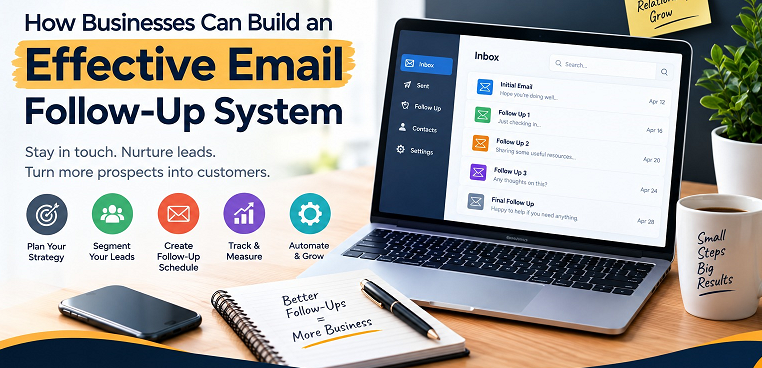
- Initial outreach email
- First follow-up after a few days
- Second follow-up with additional value
- Final follow-up after another reasonable interval
The exact timing should depend on the industry, type of prospect, and sales cycle.
The important point is to create a repeatable process so that interested prospects do not get forgotten.
4. Keep Follow-Up Emails Short
Your prospects may receive dozens of emails every day. Long follow-up messages can make it difficult for them to understand what you want.
Keep your emails concise and focused. Remind the prospect why you are contacting them, provide relevant information, and include one clear call to action.
For example, instead of explaining your entire company again, you could briefly reference your previous email and ask whether they would be open to a short conversation.
5. Add Value to Every Follow-Up
A follow-up should not always say, “Just checking in.”
If every email repeats the same message, prospects may stop paying attention.
Instead, use follow-ups to provide something useful. You could share a relevant case study, useful insight, solution idea, industry information, or answer to a potential concern.
Providing value gives prospects a reason to continue the conversation.
6. Personalize Your Communication
Personalization can make follow-up emails feel more relevant and professional.
Use information that is genuinely relevant to the prospect, such as their company, role, industry, recent business activity, or a previous conversation.
However, personalization should feel natural. Adding a prospect’s name to an otherwise generic email is not enough. The message should demonstrate that you understand why you are contacting that particular person.
7. Use Clear Calls to Action
Every follow-up should make it easy for the prospect to understand what to do next.
Avoid including multiple requests in the same email. Instead, use a simple call to action such as:
- “Would you be available for a quick call?”
- “Would you like me to send more details?”
- “Is this something your team is currently exploring?”
A clear CTA reduces confusion and makes it easier for prospects to respond.
8. Track Your Follow-Ups
Without tracking, it is difficult to know whether your email follow-up system is working.
Businesses should monitor information such as emails sent, open rates, replies, positive responses, meetings booked, and prospects that have stopped responding.
Tracking these metrics can help identify which messages and approaches are generating better engagement.
A CRM or email marketing platform can make this process easier by keeping prospect information and communication history organized in one place.
9. Automate Repetitive Tasks
Manual follow-up can become time-consuming when a business is managing hundreds of prospects.
Automation can help businesses schedule emails, organize contacts, create follow-up sequences, and send reminders when action is required.
However, automation should support your communication rather than make it feel robotic. Important prospects should still receive personalized communication when appropriate.
The combination of automation and human interaction can make the process more efficient while maintaining a professional experience.
10. Know When to Stop
Following up consistently does not mean sending unlimited emails.
If a prospect has repeatedly ignored your messages, continuing to contact them too frequently can negatively affect their experience.
Create a reasonable stopping point in your follow-up process. You can also leave the door open for future communication by sending a polite final message that allows the prospect to reconnect when the timing is right.
This keeps your outreach professional while allowing you to focus your time on more engaged prospects.
Build a Repeatable Email Follow-Up Process
An effective email follow-up system is not about sending more emails. It is about sending the right message, to the right prospect, at the right time.
Businesses that use segmentation, personalization, consistent scheduling, useful content, clear CTAs, and proper tracking can create a more organized approach to lead nurturing.
The biggest advantage of having a system is consistency. Instead of relying on memory or manually checking every prospect, your team can follow a defined process that helps reduce missed opportunities and keeps potential customers engaged.
Grow Your Outreach with YBDIGITALPRO
Managing prospect research, email campaigns, follow-ups, CRM updates, and lead tracking can take valuable time away from your core business activities.
YBDIGITALPRO helps businesses manage their email marketing, lead generation, LinkedIn prospecting, CRM updates, and follow-up processes with a structured approach designed around their business goals.
If you want to build a more consistent email follow-up system and spend less time managing repetitive outreach tasks, get in touch with YBDIGITALPRO to discuss how we can support your lead-generation and business growth efforts.